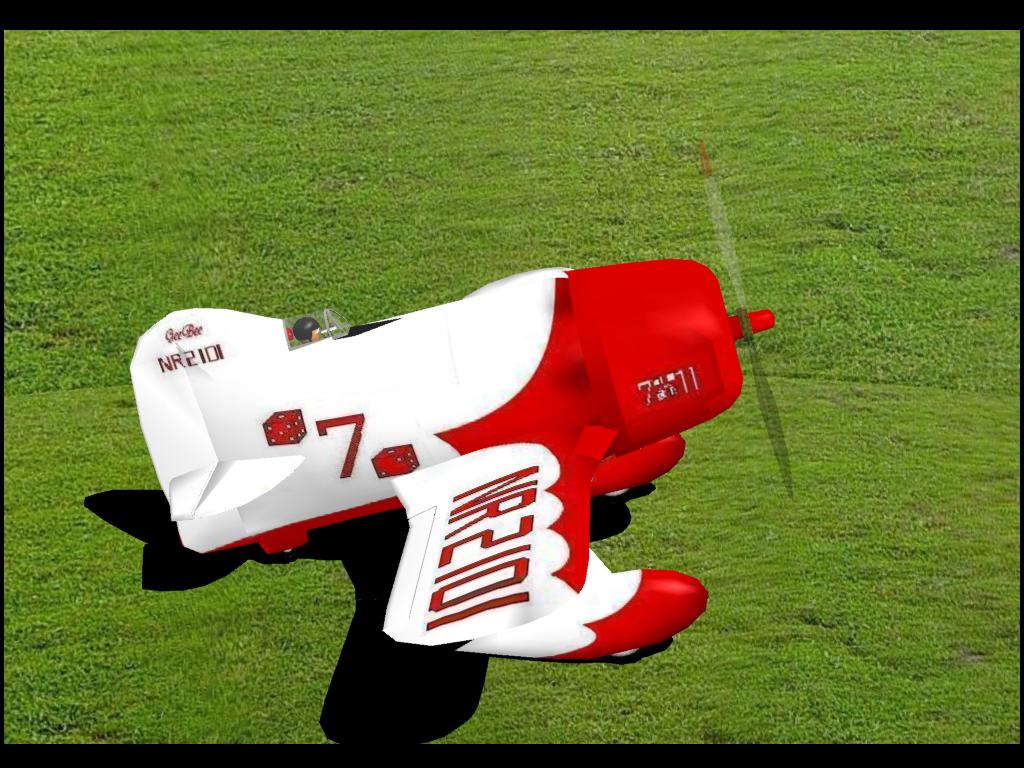
GeeBee R2
The real Gee Bee R-2 — sister to the Thompson Trophy-winning R-1 and built for cross-country air racing — captured as a sport-scale RC model.
About
The real Gee Bee racers — the Super Sportster R-1 and R-2 — were built in 1932 by Granville Brothers Aircraft of Springfield, Massachusetts. "Gee Bee" simply stands for Granville Brothers. After winning the 1931 Thompson Trophy with their Model Z, brothers Zantford "Granny" Granville and chief engineer Howell "Pete" Miller wind-tunnel-tested a radical new approach at NYU under Professor Alexander Klemin: a teardrop-shaped fuselage actually wider than the engine cowling at its broadest point, designed to minimize drag at race speeds. The result was one of the most distinctive — and most dangerous — aircraft of the golden age of air racing.
The R-2 was the cross-country variant of the same design philosophy. Where the R-1 carried the larger 800 hp Pratt & Whitney Wasp Senior radial for closed-course pylon racing, the R-2 used a smaller 550 hp Pratt & Whitney Wasp Junior R-985 nine-cylinder radial in a narrower cowling, with substantially more fuel capacity (302 U.S. gallons) for long-distance racing between fuel stops. The R-1 won the 1932 Thompson Trophy with Jimmy Doolittle at the controls, and set a Federation Aéronautique Internationale landplane speed record of 294.4 mph in the Shell Speed Dash at the same meet. The R-2 served as the cross-country sister, designed for the Bendix Trophy long-distance races rather than the Thompson Trophy closed-course events.
Doolittle famously described the R-1 as "balancing a pencil or an ice cream cone on the tip of your finger" — fast, but "a touchy and probably unpredictable airplane." Most original Gee Bees were eventually lost in fatal crashes, cementing the type's reputation as the deadliest of the air-racing era. The Gee Bee silhouette returned to popular consciousness in 1991 when Disney's The Rocketeer featured a flying replica, and around the same time airshow pilot Delmar Benjamin proved the type could actually be flown safely, taking his hand-built R-2 replica around the U.S. airshow circuit through the 1990s.
The unmistakable Gee Bee shape — short, fat fuselage; tiny wings; big radial up front; pilot pushed back near the tail — appears in countless modern foam, balsa, and giant-scale RC kits across the modern market.
In the simulator
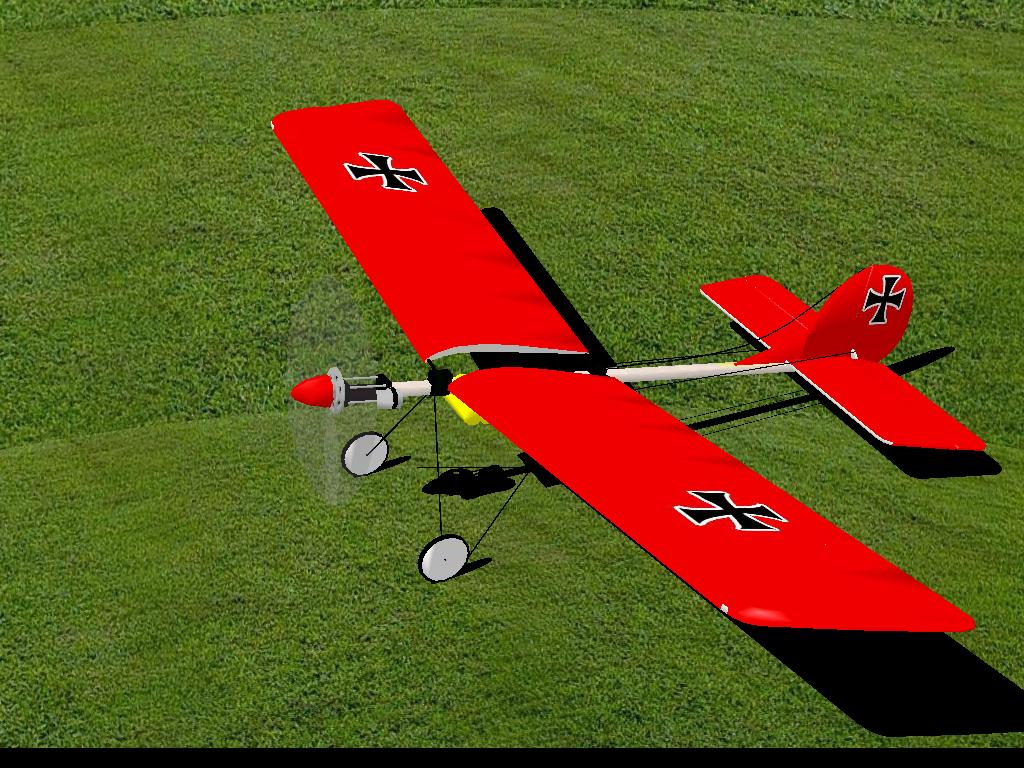
A sport-scale racer with the demanding handling of the real Granville design. The R-2 in our sim has the kind of short-coupled, twitchy character the real airframe was famous for — small wings, big radial up front, narrow margins on stall and roll authority. Use it for sport-scale flying with attitude: low passes down the grass strip, the tight pylon-style turns of a 1930s air-race circuit, and the kind of unhurried sport-scale aerobatic that suits a Granville racer. Pairs well with grass-strip and golden-age field landscapes. A natural sibling of the GeeBee R3 Fantasy Racer (Aerobatic Trainers pack) and the GeeBee Army, Edge, and Extra fantasy variants in this pack.