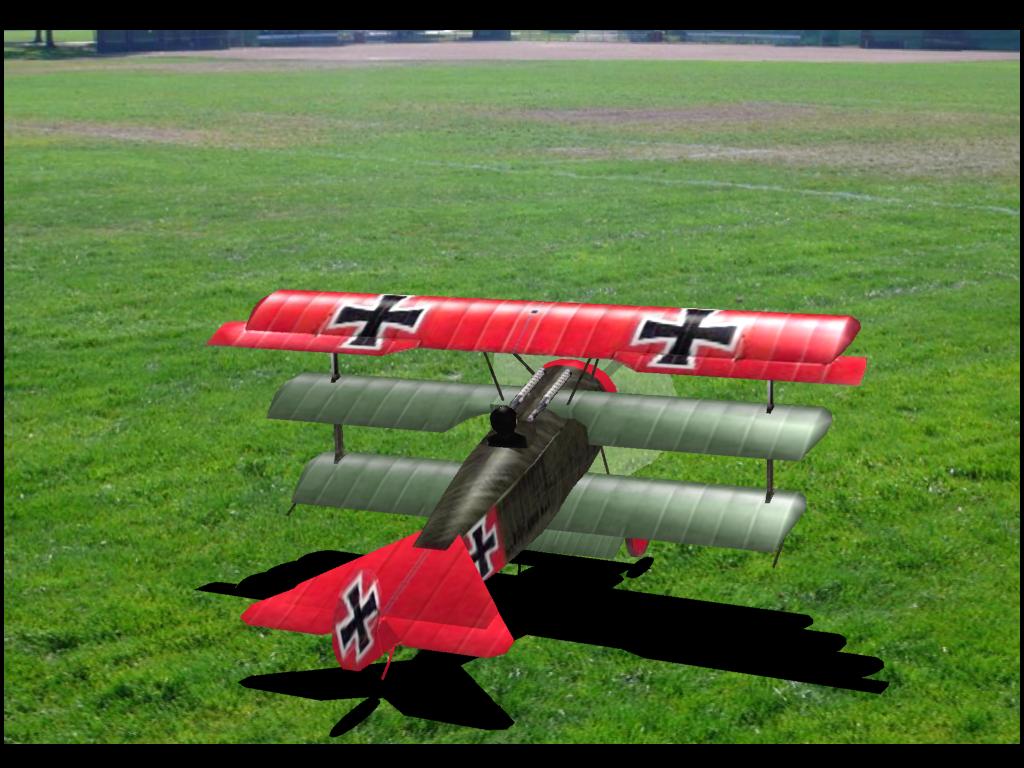
Fokker_DR1
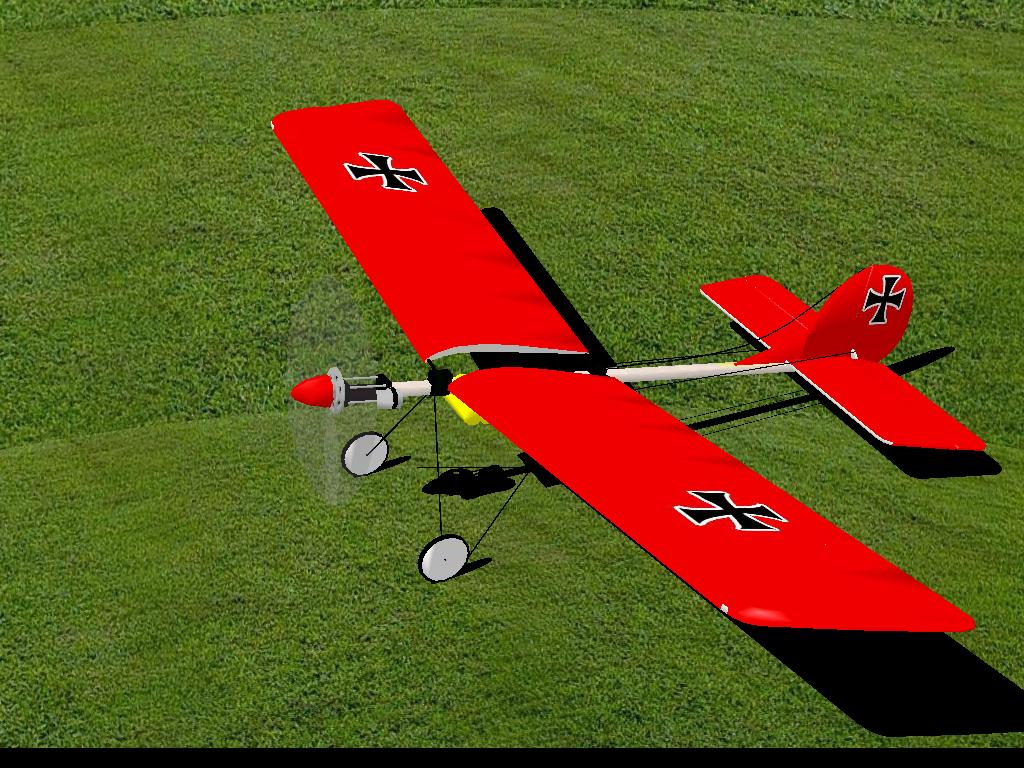
The Fokker Dr.I Dreidecker — the German triplane forever associated with Manfred von Richthofen, the "Red Baron" — captured as a sport-scale RC model.
About
The Fokker Dr.I Dreidecker (German for "triplane") was Anthony Fokker's response to the Sopwith Triplane that began appearing over the Western Front in February 1917. Despite its single-Vickers armament, the British triplane was outclassing the more heavily armed Albatros fighters then equipping the German Luftstreitkräfte. After Anthony Fokker viewed a captured Sopwith Triplane while visiting Jasta 11, designer Reinhold Platz produced the V.4 prototype — a small, rotary-engined triplane with a steel-tube fuselage and thick cantilever wings, which evolved into the Dr.I.
Idflieg ordered twenty pre-production aircraft on July 14, 1917, and two were sent to Jastas 10 and 11 for combat evaluation in late August. Manfred von Richthofen first flew Dr.I 102/17 on September 1, 1917, and shot down two enemy aircraft over the next two days. Early production aircraft, however, suffered serious structural failures — Leutnant Heinrich Gontermann was killed performing aerobatics on October 29, 1917, when his triplane broke up in flight, and Leutnant Günther Pastor died two days later in a similar in-flight breakup. Idflieg grounded the type pending a structural inquiry on November 2, and the modified Dr.I returned to service on November 28.
The Dr.I gained its place in popular memory as the airframe in which Manfred von Richthofen scored his last seventeen victories — and in which he was killed on April 21, 1918. Other German aces flew the type with great success: Josef Jacobs scored thirty confirmed kills in the Dr.I. The unmistakable three-stacked-wing silhouette is one of the most-modeled WWI aircraft subjects in modern RC scale flying, and the all-red Richthofen livery remains one of the most-painted scale schemes at any fly-in featuring vintage subjects.
In the simulator
A fascinating sport-scale subject with the slow, draggy character of a real WWI fighter. The Dr.I in our sim flies with the kind of low-speed authority that the three-wing layout was designed for — willing on the controls in close-quarters maneuvering, predictable in stall, and forgiving of tight turns. Use it for low-and-slow scale flying, the kind of dogfight-style figure-eight pattern that fits the WWI aesthetic, and gentle aerobatics. Pairs well with grass-strip landscapes and rural fields that suit the Western Front aesthetic.