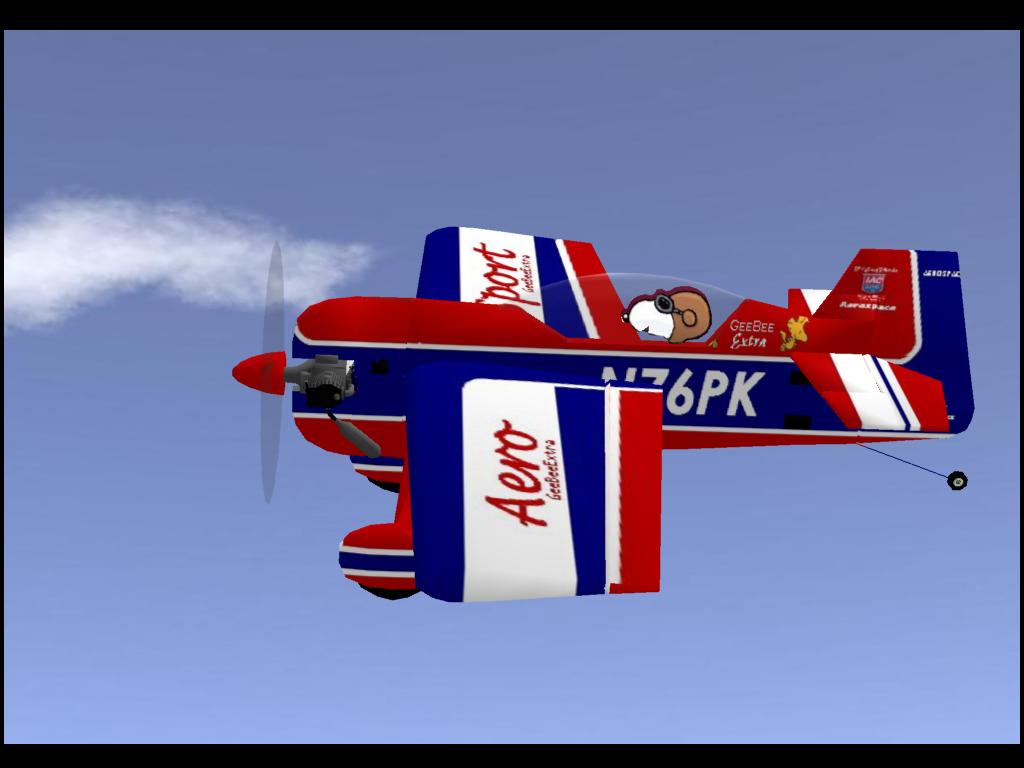
GeeBee Extra
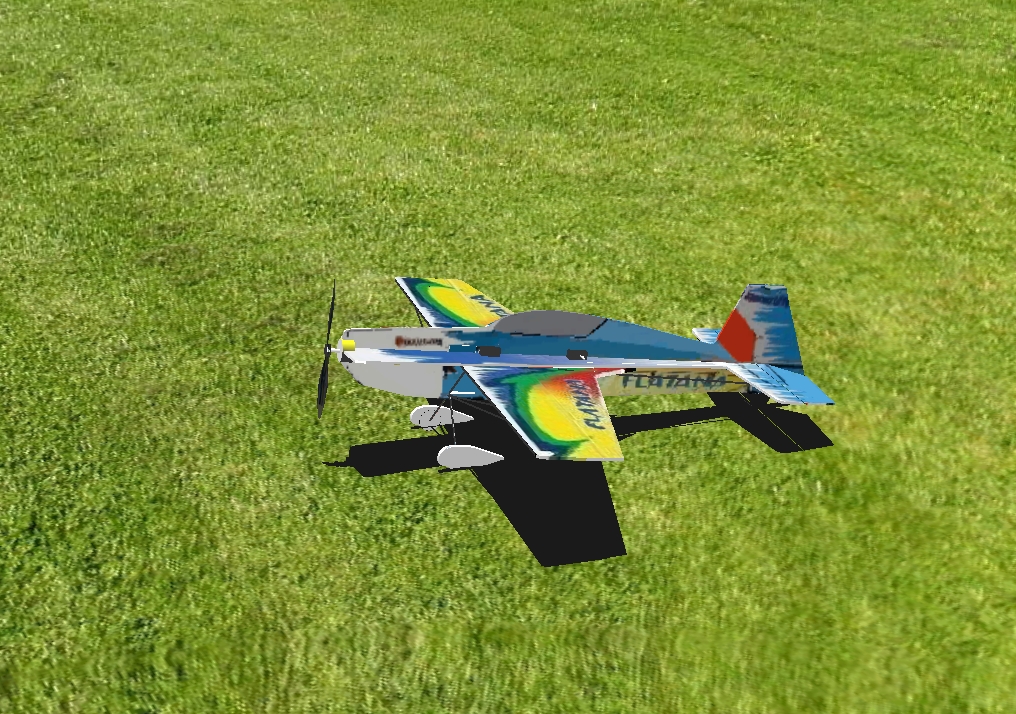
A "what-if" fusion of the 1932 Gee Bee Super Sportster shape and the modern Extra 300 unlimited-aerobat aesthetic — Granville meets Walter Extra in fiction.
About
The real Gee Bee racers — the Super Sportster R-1 and R-2 — were built in 1932 by Granville Brothers Aircraft of Springfield, Massachusetts. "Gee Bee" simply stands for Granville Brothers. The R-1, piloted by Jimmy Doolittle, won the 1932 Thompson Trophy at 294.4 mph and set the FAI landplane speed record of the era. Six decades later, Walter Extra of Hünxe, Germany, designed the Extra 300, a two-seat unlimited-aerobatic monoplane that first flew on May 6, 1988, and went on to become the airframe most associated with American aerobatic legend Patty Wagstaff and a fixture of FAI World Aerobatic Championships through the 1990s and 2000s.
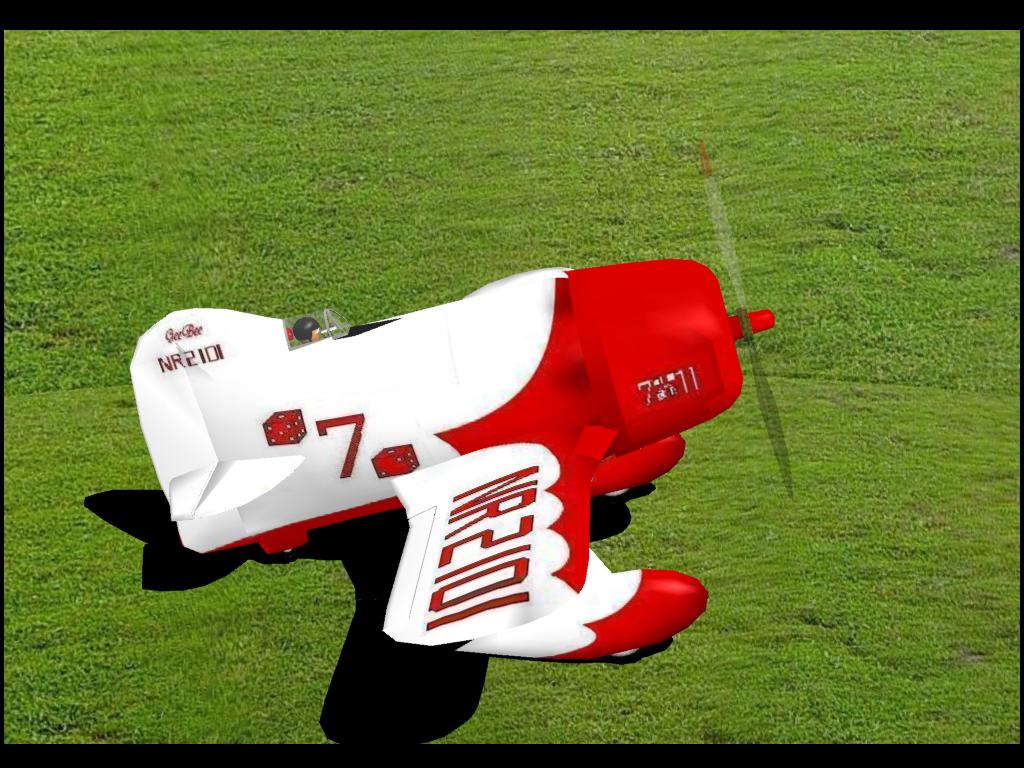
This RC model is a fictional fusion of the two designs — a Gee Bee silhouette in Extra-style competition livery, the kind of "if Walter Extra had inherited the Granville Brothers' company" exercise that appears in sport-scale RC modeling. The fusion captures the through-line of unlimited-aerobatic competition across two eras separated by fifty-six years: from short-coupled radial-engined pylon racing in 1932 to clean carbon-composite competition aerobatics in the 1990s.
Treat this model as a tribute to both Granville and Walter Extra design lineages, rather than as a strict scale subject for either. The unmistakable Gee Bee shape — short, fat fuselage; tiny wings; big radial up front — carries through, even with the modern Extra-style paint scheme on the wings.
In the simulator
The same demanding handling as the other Gee Bee variants in this and the Aerobatic Trainers pack — short-coupled, twitchy, and rewarding of stick discipline. Use it for sport-scale flying that bridges golden-age and modern aerobatic aesthetics. Pairs well with grass-strip and golden-age field landscapes. A natural sibling of the GeeBee Army, GeeBee Edge, and GeeBee R2 in this same pack.