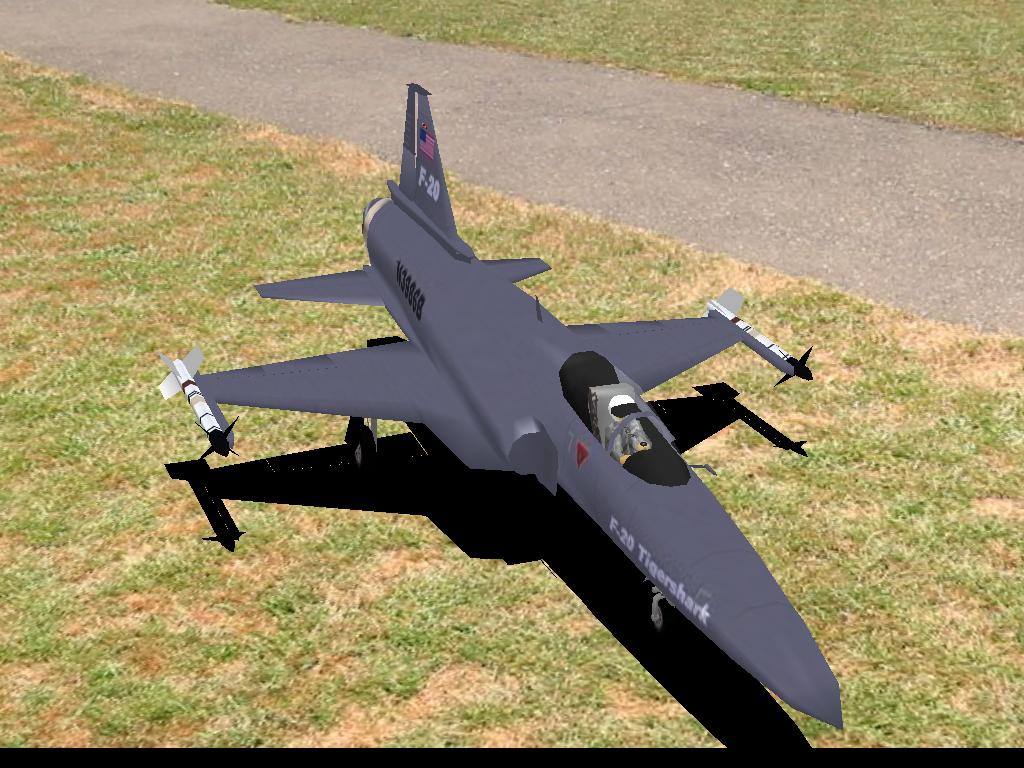
F-20 Tigershark
The Northrop F-20 Tigershark — the privately-funded supersonic light fighter that went supersonic on its first flight but never won an order — captured as an RC EDF scale model.
About
The Northrop F-20 Tigershark is one of the great "what if" stories of late-Cold-War American fighter aviation. Northrop developed the type privately in the late 1970s and early 1980s as a successor to the company's highly successful F-5E Tiger II light fighter. Initially designated F-5G, the program drew over $1.2 billion in private investment from Northrop — an unprecedented sum for a privately funded military aircraft program — with the goal of producing an export-friendly fighter that could compete against the more expensive F-16 Fighting Falcon for allied-nation contracts.
The first F-5G flew on August 30, 1982, piloted by Russ Scott. The prototype climbed to 40,000 feet and reached Mach 1.04 — going supersonic on its very first flight, a rare achievement for any new fighter design. The primary change from the F-5E was a single General Electric F404 turbofan (the engine developed for the F/A-18 Hornet) replacing the F-5E's twin J85s, giving the Tigershark roughly 60% more thrust. The USAF approved the redesignation to F-20 in late 1982, and the name "Tigershark" followed in March 1983. Aerospace legend Chuck Yeager became the program's spokesperson.
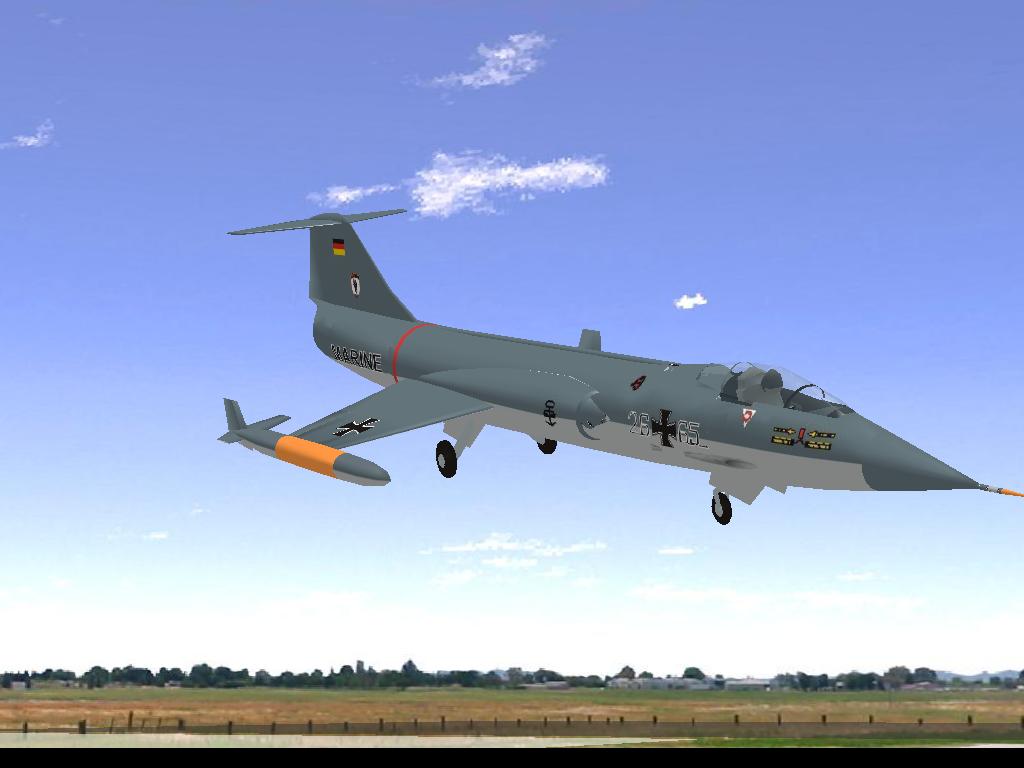
Despite exceptional performance, lower operating costs than the F-104 and contemporary fighters, and aggressive promotion by Northrop, the F-20 program was cancelled in 1986 after failing to win a single order — largely because the Reagan administration reversed the previous policy of restricting allies from purchasing the more capable F-16. The unmistakable F-20 silhouette — F-5 lineage with single-engine intake, sharp leading-edge extensions, and clean lines — is a distinctive RC EDF subject for modelers interested in the road-not-traveled of late-Cold-War fighter design.
In the simulator
A clean, fast supersonic-era jet with the responsive handling of an F-5-lineage airframe. The F-20 in our sim flies the way a good light fighter should — agile, willing on the controls, and the kind of approach speeds that demand precision. Use it for jet pattern flying with the demanding margins of a small fighter. Pairs well with airport-class landscapes. A different character from the bigger Century Series jets in this pack — agile, lightweight, and fast.