F14
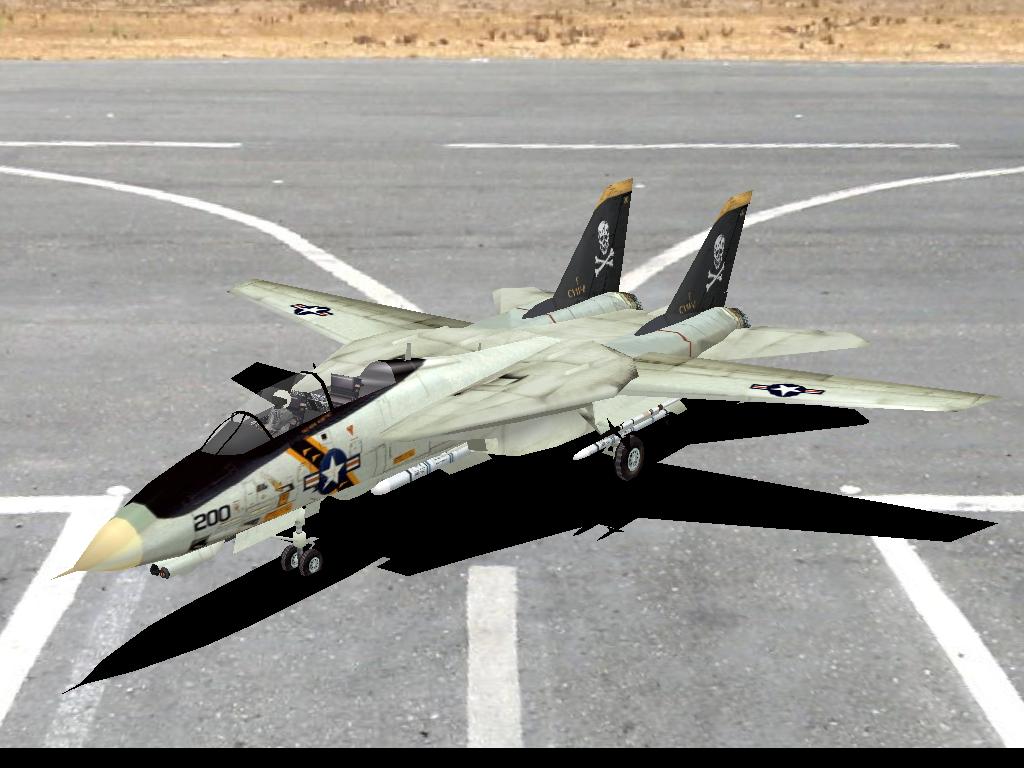
The Grumman F-14 Tomcat — the swing-wing carrier interceptor that made *Top Gun* a household word — captured as an RC EDF scale model.
About
The Grumman F-14 Tomcat was developed for the U.S. Navy's VFX (Naval Fighter Experimental) program in the late 1960s, after the collapse of the General Dynamics-Grumman F-111B project left the Navy needing a true fleet-defense fighter capable of intercepting Soviet bombers and cruise missiles at long range. Grumman's design — twin engines, twin tails, variable-sweep wings, two-seat tandem cockpit, and the AN/AWG-9 weapons system carrying the long-range AIM-54 Phoenix missile — first flew on December 21, 1970, at Grumman's flight test center at Calverton, on Long Island.
The Tomcat reached initial operational capability in 1973 and entered fleet service in 1974 aboard USS Enterprise, replacing the McDonnell Douglas F-4 Phantom II. The F-14 was the first of the American "Teen Series" fighters — a generation that incorporated air combat lessons learned against smaller, more maneuverable MiG fighters during the Vietnam War. Its AIM-54 Phoenix missile and powerful AWG-9 radar could track 24 simultaneous targets at ranges up to 100 nautical miles, giving the Navy unmatched fleet air defense capability during the Cold War.
The Tomcat served as the Navy's primary maritime air-superiority fighter, fleet-defense interceptor, and tactical aerial-reconnaissance platform from the 1970s into the 2000s. A total of 712 F-14s were built between 1969 and 1991. Pop culture made the F-14 a household name when Top Gun (1986) put Maverick and Goose in the back of one — and the F-14 remains one of the most iconic carrier-based fighters in American naval aviation history.
The unmistakable F-14 silhouette — variable-sweep wings, twin engines, twin tails, the distinctive proboscis-style canopy — is one of the most-modeled jet subjects in modern RC EDF scale flying.
In the simulator
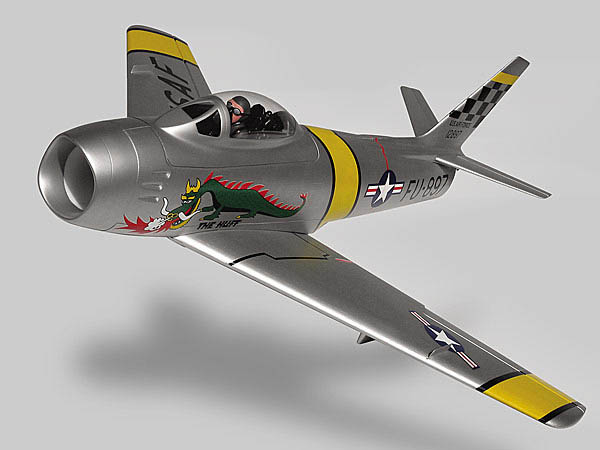
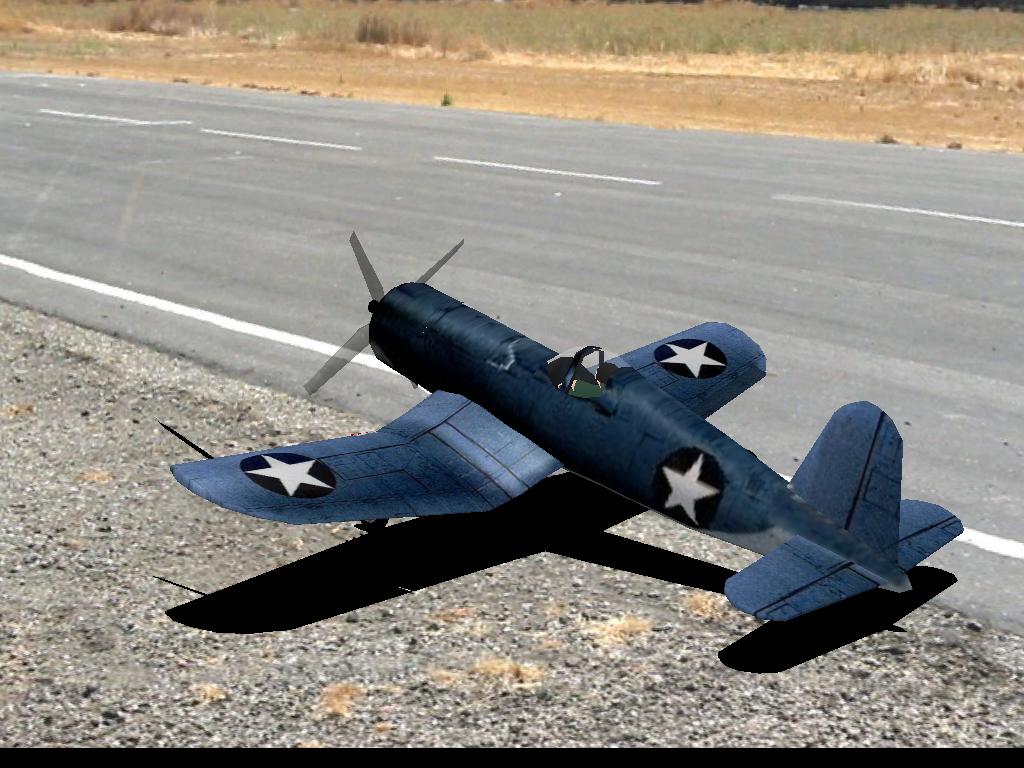
A serious twin-engine carrier jet with the demanding personality of the real Tomcat. Substantial inertia, twin-engine throttle coordination, and the kind of approach speeds that put a real F-14 pilot through years of training. Use it for serious carrier-jet pattern flying — energy management on approach, the precise coordinated turns of a fleet defender, and the kind of jet flying that suits a top-tier interceptor. Pairs well with airport-class landscapes. The most ambitious carrier jet in this pack alongside the F4U_Corsair (piston) and F-86 Sabre (early jet).