F-100
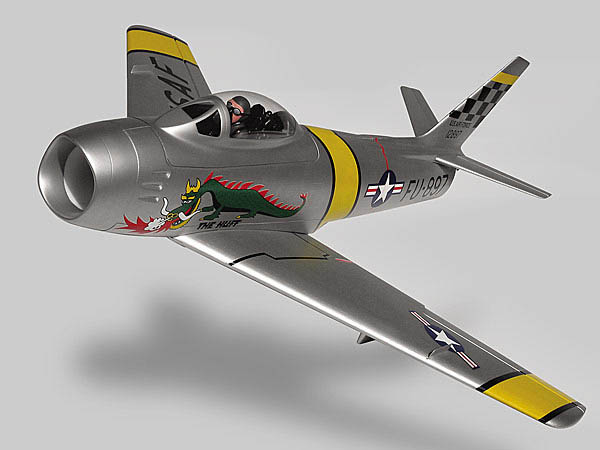
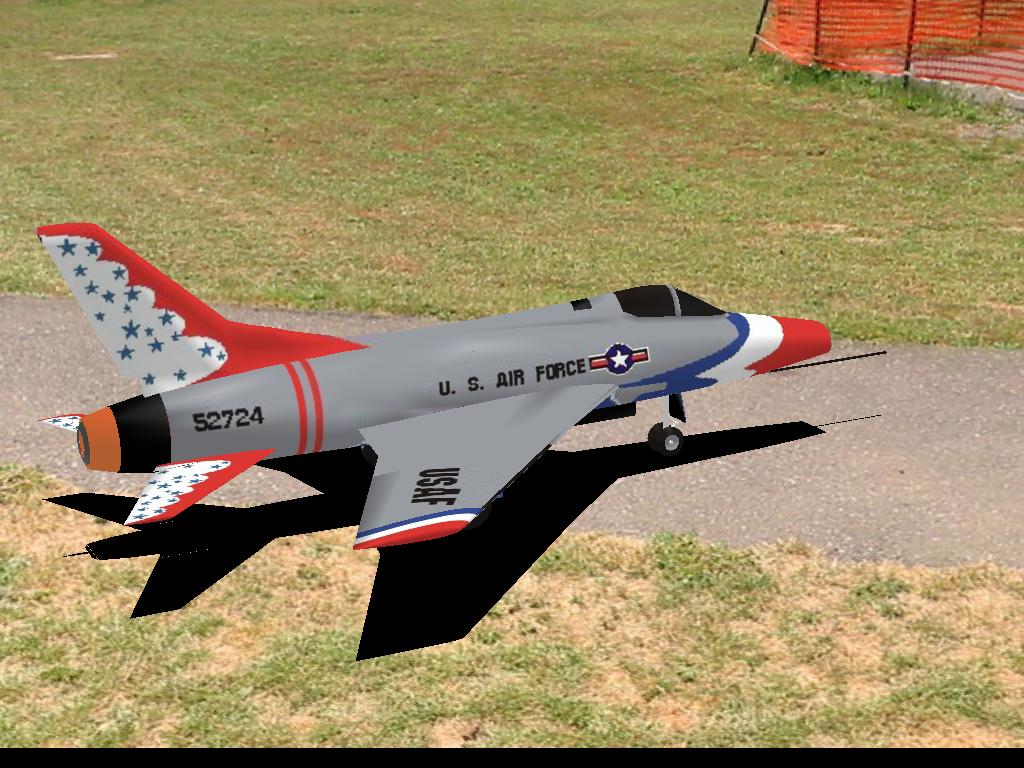
The North American F-100 Super Sabre — the first U.S. fighter capable of supersonic flight in level flight — captured as an RC EDF scale model.
About
The North American F-100 Super Sabre was conceived in the late 1940s as a higher-performance successor to the F-86 Sabre, initially proposed under the working name "Sabre 45" and delivered to the U.S. Air Force as an unsolicited proposal in January 1951. Two prototypes were ordered the following year. The first YF-100A made its maiden flight on May 25, 1953 — seven months ahead of schedule — with North American chief test pilot George S. Welch at the controls at Edwards Air Force Base. On that very first flight, the prototype reached Mach 1.03, making the F-100 the first U.S. aircraft to exceed Mach 1 in level flight on its maiden flight.
The Super Sabre was the first of the Century Series of American jet fighters, and the world's first production fighter capable of supersonic speed in level flight. North American built 2,294 F-100s between 1953 and 1959, in fighter, fighter-bomber, and reconnaissance variants. The type served extensively with the USAF in Europe and the Pacific, and went to war in Vietnam in the close-air-support role from 1965 onward — flying more sorties in Vietnam than any other USAF aircraft. Early F-100s suffered from yaw instability and inertia coupling that led to numerous fatal accidents, but the type's overall service record cemented its place at the entry of the supersonic era.
The unmistakable Super Sabre silhouette — sharply swept wings, large oval intake, distinctive nose contour — is one of the more popular Century Series subjects in modern RC EDF scale flying. Foam and composite F-100 EDF kits appear in the medium-to-large scale jet category at modern fly-ins.
In the simulator
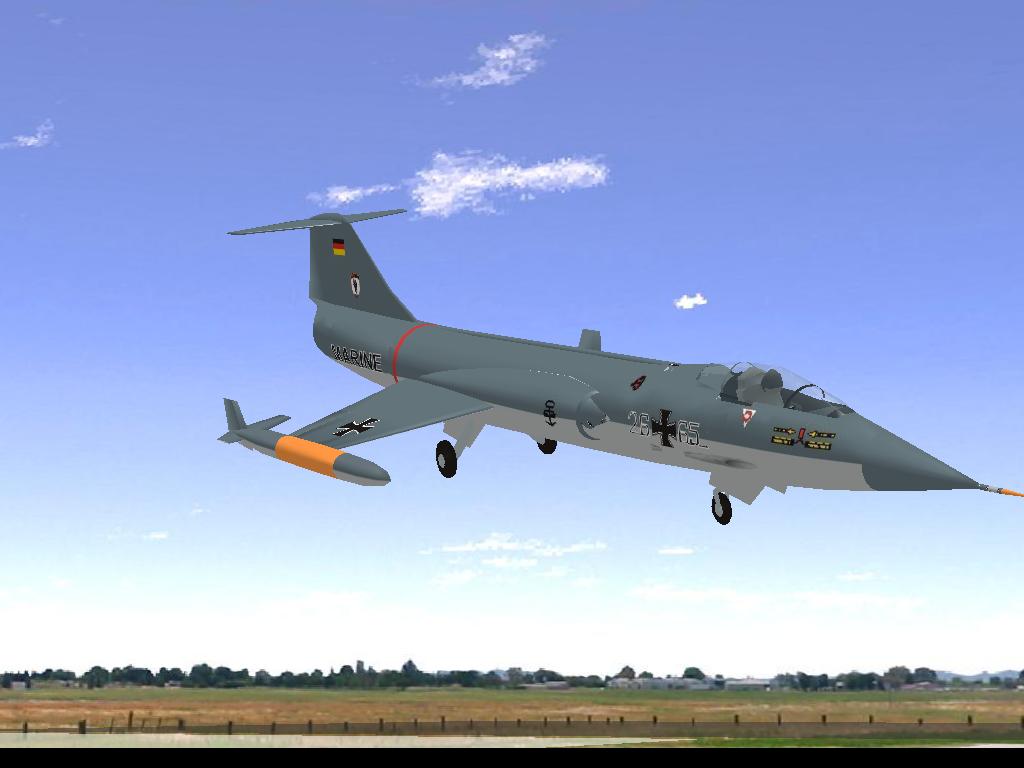
A demanding supersonic-era jet that rewards precise jet pattern flying. Substantial inertia, the kind of approach speeds Century-Series pilots had to learn, and the visual cues of a swept-wing fighter at altitude. Use it for serious EDF jet flying — energy management, precise glideslope, and the rudder-coordinated touchdown a real F-100 demanded. Pairs well with airport-class landscapes. A natural sibling of the F-86 Sabre and F-104 Starfighter in this same pack — three generations of the supersonic-fighter-fighter evolution.