P40F
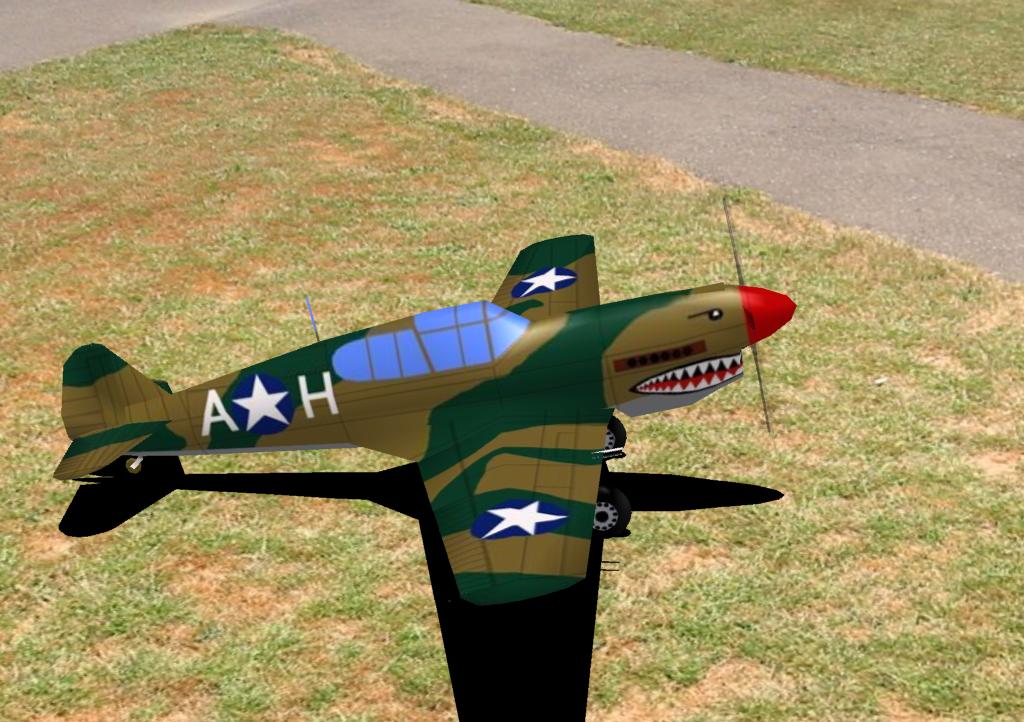
The Curtiss P-40 Warhawk — the shark-mouthed fighter of the Flying Tigers and Pearl Harbor's defenders — captured as a sport-scale RC warbird in the F variant.
About
The Curtiss P-40 Warhawk evolved from the earlier Curtiss P-36 Hawk, fitted with the supercharged Allison V-1710 inline engine in place of the P-36's radial. The XP-40 prototype made its first flight on October 14, 1938, and the type entered USAAC service in 1939 as the U.S. Army's most numerous front-line fighter at the outbreak of the Second World War. Curtiss-Wright built almost 14,000 P-40s across all variants between 1939 and 1944 — making the Warhawk one of the most-produced American fighters of the war.
The P-40F variant that this model represents was a 1942 development that switched from the Allison V-1710 to the Packard-built Rolls-Royce Merlin V-1650 — the same engine family that would later transform the P-51 Mustang into a high-altitude escort fighter. The Merlin gave the P-40F substantially better high-altitude performance than earlier Allison-powered variants, although the P-40 airframe never matched the high-altitude ceiling of the late-war Mustangs.
The P-40 fought everywhere in the early war — defended Pearl Harbor on December 7, 1941; flew with the Royal Air Force in North Africa as the "Tomahawk" and "Kittyhawk"; and served with the American Volunteer Group ("Flying Tigers") under Claire Chennault in China, where Curtiss P-40s in their distinctive shark-mouth livery became one of the most iconic warbird paint schemes ever applied. The unmistakable inline-engine cowl, ventral radiator, and shark-toothed nose appears in countless modern RC scale warbird kits.
In the simulator
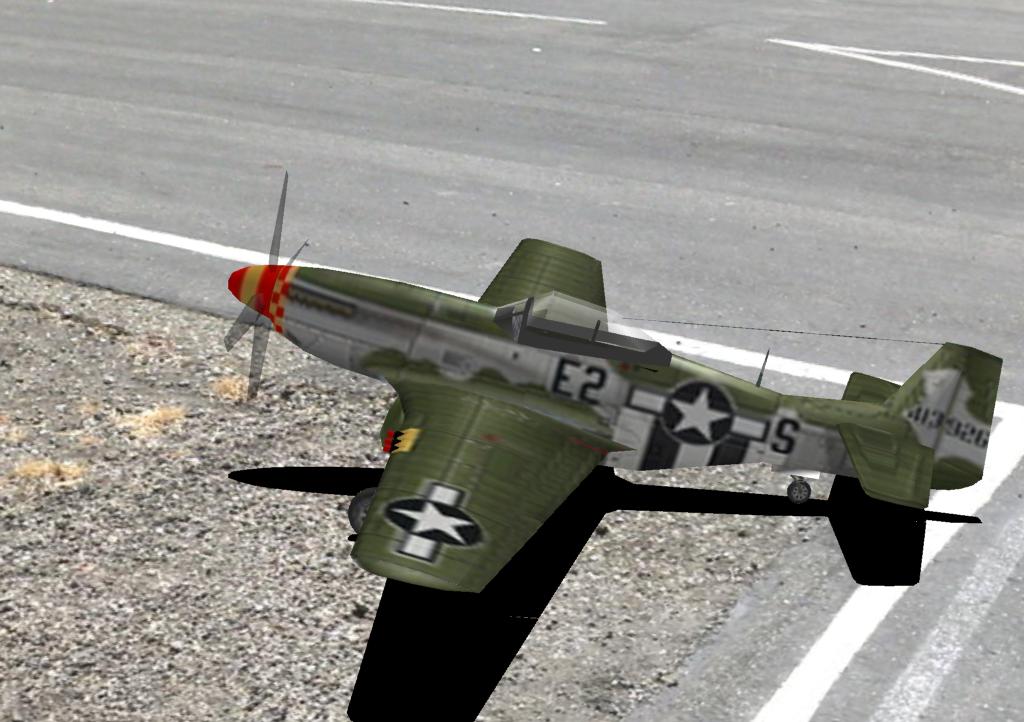
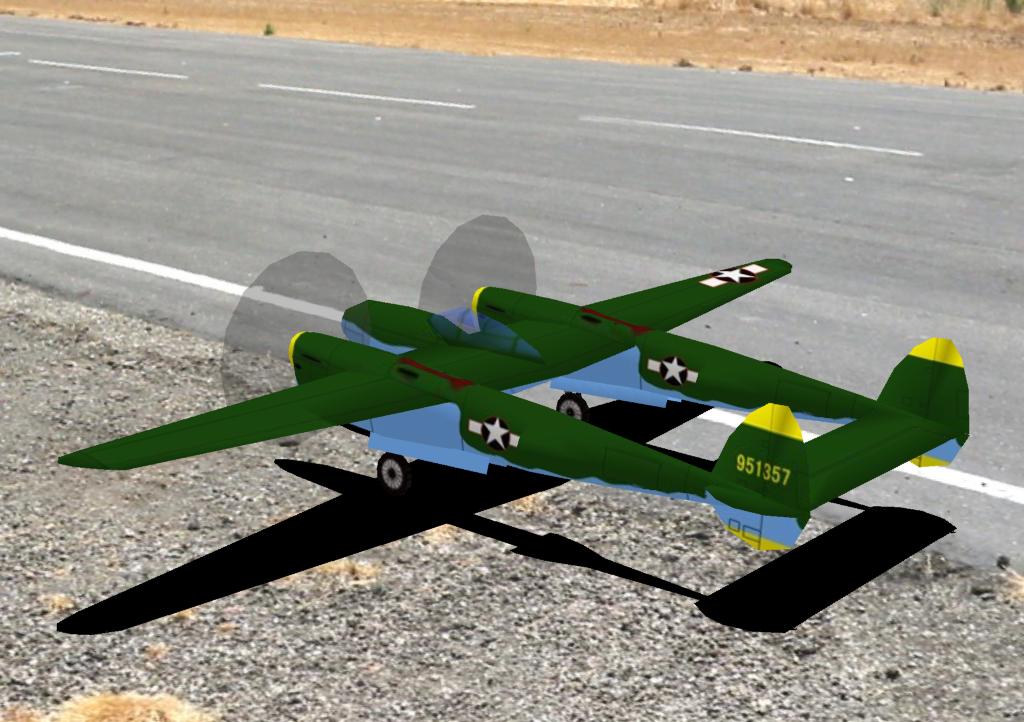
A satisfying warbird scale subject with the substantial-but-friendly handling of the real Curtiss design. Use it for warbird-style scale flying — low passes, gentle wing-overs, and the unhurried pattern of an early-war fighter. A natural sibling of the P-51 Mustang and P38J in this same pack — three pillars of American WWII fighter aviation.