Chester Jeep
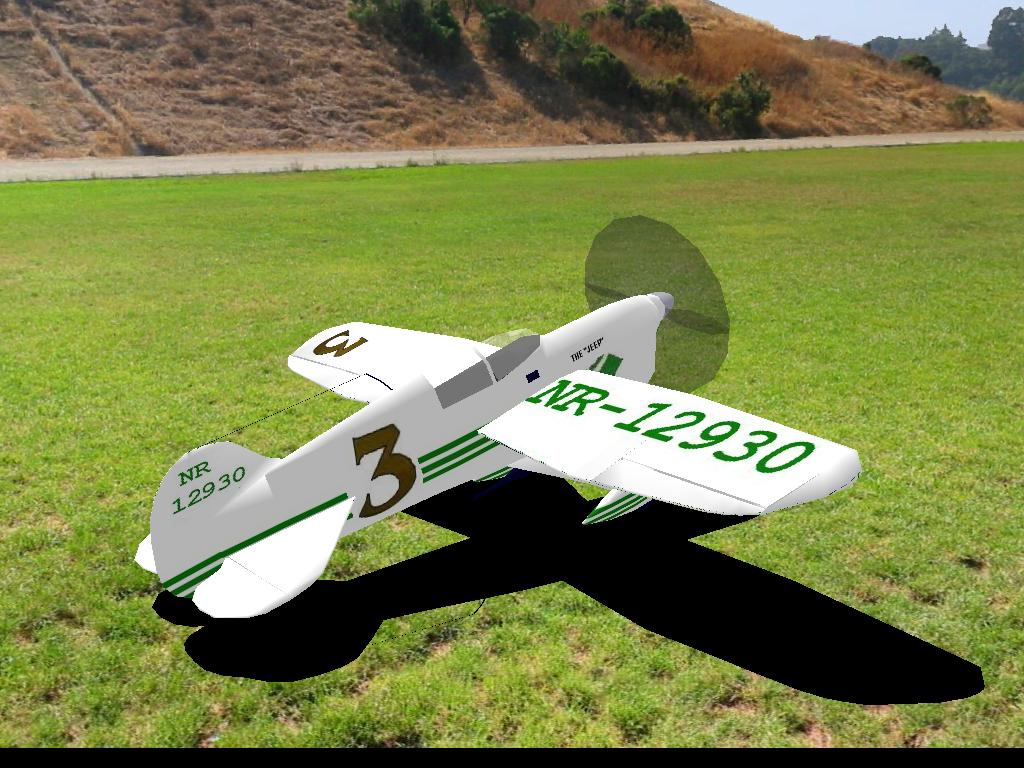
The Chester Jeep — Art Chester's hand-built Golden Age racer that won the 1947 Goodyear Trophy — captured as a sport-scale RC model.
About
The Chester Jeep was built by Arthur "Art" Chester in his garage in the early 1930s for the 1932 National Air Races, where it was originally entered as the Chester Special. The aircraft made its first flight on August 14, 1932, and Art Chester first competed with it at the 1933 National Air Races, where he took first place in one race and fourth in four others. By 1936 the airplane had been renamed "Jeep" — borrowed from the popular Popeye comic strip character — and the name stuck for the rest of the airframe's competitive career.
Chester raced the Jeep through 1937, working its way up from a 155 mph best speed in 1933 to a 235 mph top speed by the late 1930s, and always taking home at least a small prize from every meet. The aircraft was retrofitted in 1947 with an 85 hp engine to meet the power requirement for the postwar Goodyear races, where — completely rebuilt and barely recognizable — it was flown to victory by Bill Falck in the consolation race of the 1947 Goodyear Trophy. The original NR-12930 (later N12930) is on display today at the EAA AirVenture Museum in Oshkosh, Wisconsin, where the white-and-green livery and the painted "3" race number are part of the visual heritage of American golden-age air racing.
The Chester Jeep silhouette — small, mid-wing, taildragger, with the kind of compact-fuselage proportions that defined the racing aircraft of the 1930s — is one of the more romantic scale subjects in modern RC modeling. Sport-scale Jeep kits appear in foam and balsa form at modern fly-ins, where Chester's design lives on as one of the most evocative reminders of the Golden Age of air racing.
In the simulator
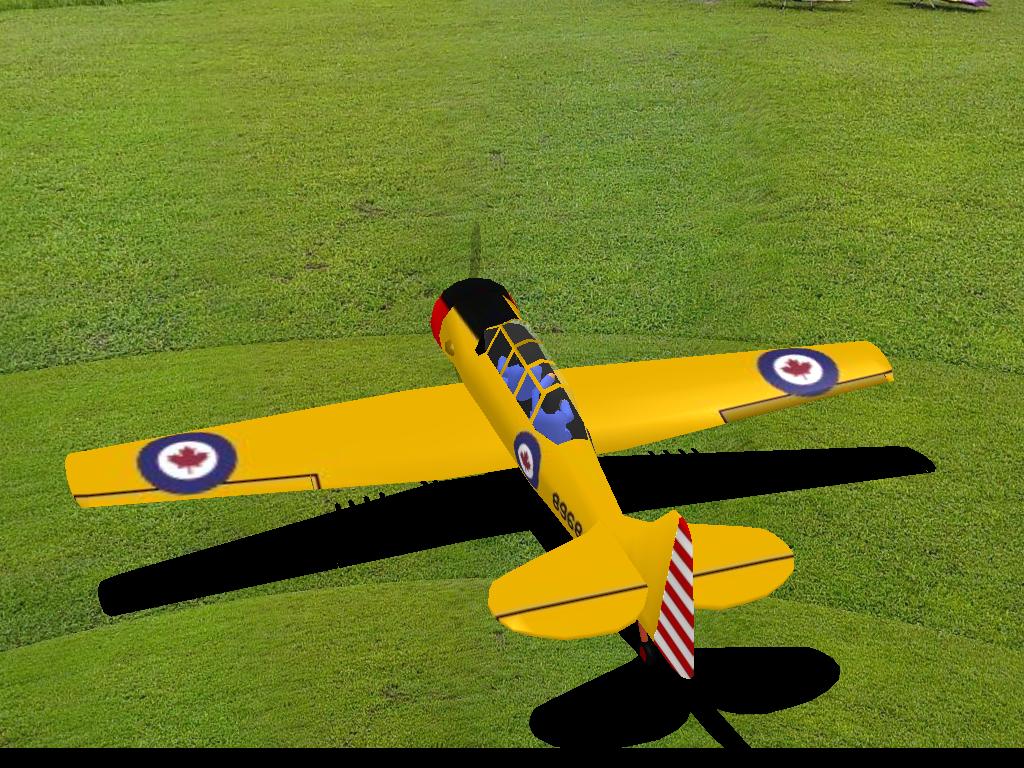
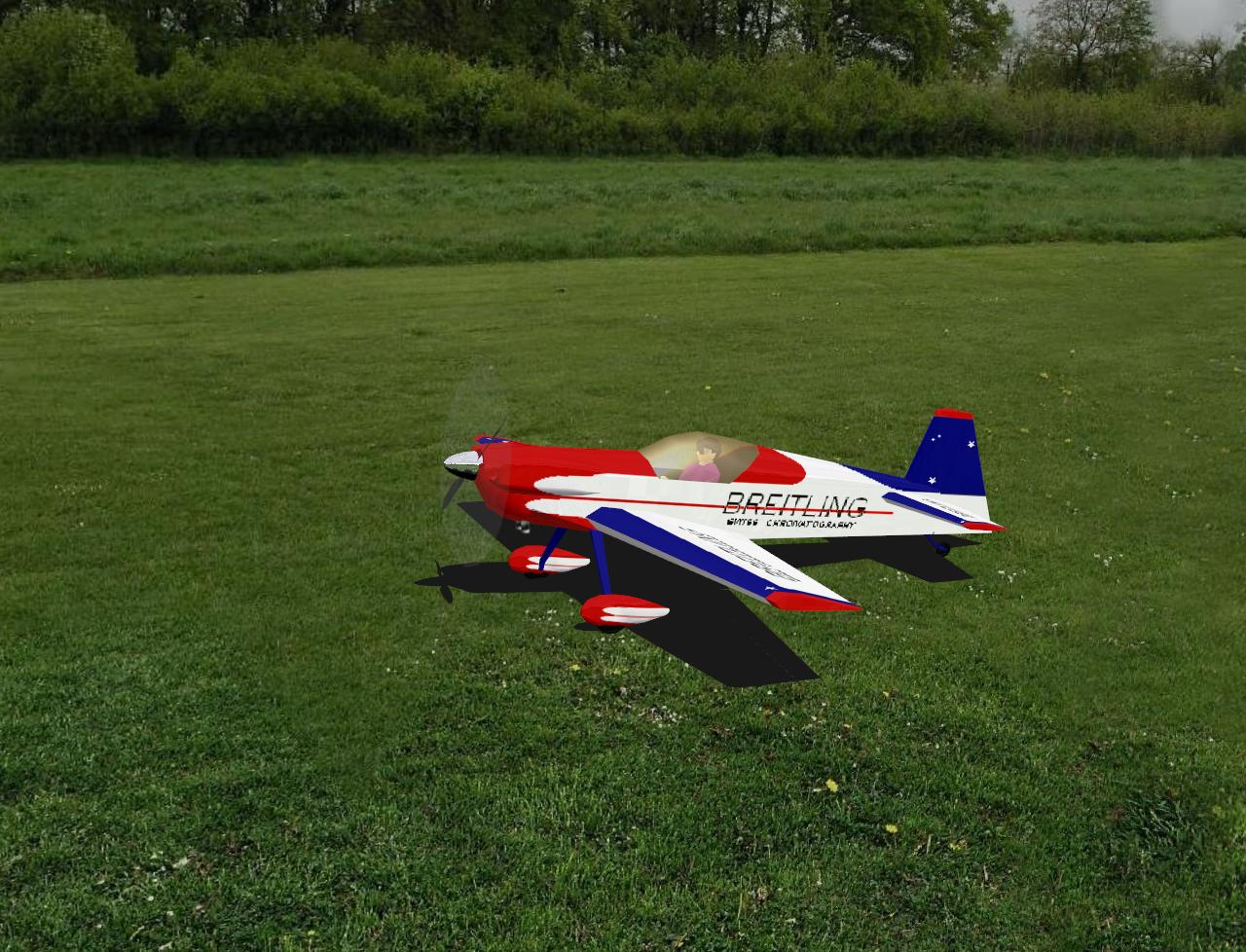
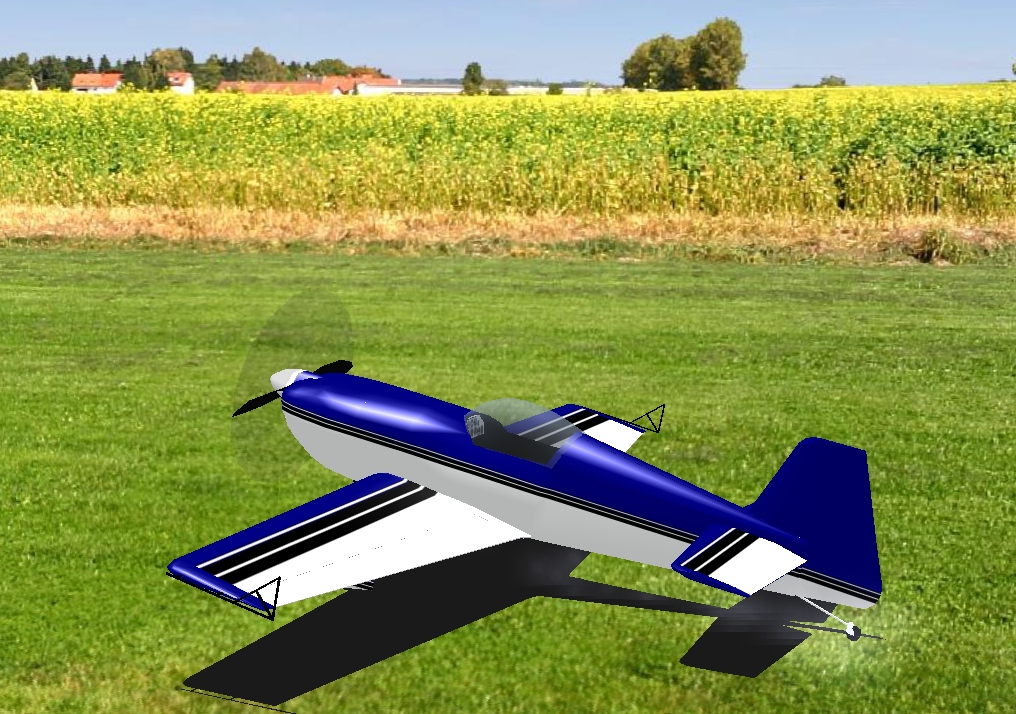
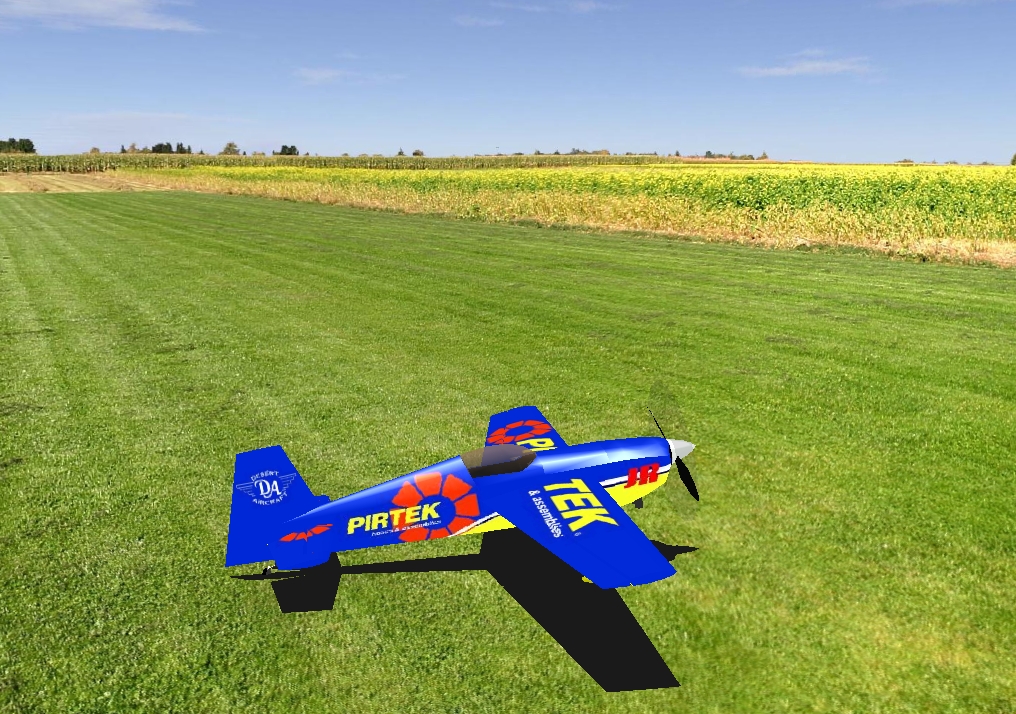
A sport-scale racer with the short-coupled handling personality of the real Chester Jeep. The mid-wing layout gives equally clean flight inverted or upright, and the small wing area means stall behavior demands respect on approach. Use it for low passes down a grass strip, the kind of tight pylon-style turns the real airframe was built for, and the unhurried sport-scale flying that suits a 1930s competitor. Pairs well with grass-strip and golden-age field landscapes. A natural sibling to the Brown-B1 Racer in CV Planes Pack 1.