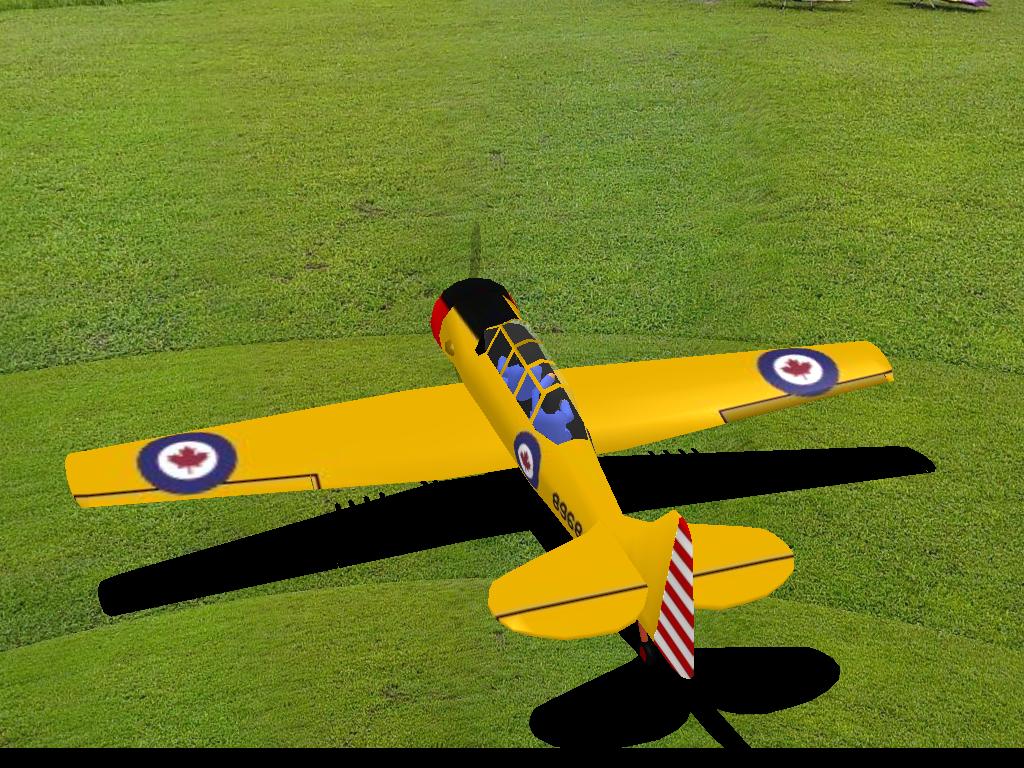
Canadian Harvard
The North American Harvard — known as the AT-6 Texan in U.S. Army service and the SNJ in U.S. Navy service — the trainer that taught Allied fighter pilots to fly through World War II.
About
The Harvard's lineage traces back to the North American NA-16 prototype, which made its first flight on April 1, 1935, when North American Aviation entered the U.S. Army Air Corps Basic Trainer Competition. Designed by James "Dutch" Kindelberger, J. Leland Atwood, and H. R. Raynor, the airframe evolved through a series of refinements into the AT-6 Texan for the United States Army Air Corps and Forces, the SNJ for the United States Navy, and the Harvard for British Commonwealth air forces — three names for what was effectively the same aircraft.
The Harvard's nickname says everything about its place in history: the "Pilot Maker." It was the advanced trainer that bridged the gap between primary trainers and front-line fighters, teaching young pilots the techniques of high-speed flight, aerobatics, formation, instrument procedures, and gunnery. By the time a wartime cadet finished Harvard training, he was ready for a Spitfire, Hurricane, Mustang, or Wildcat. North American Aviation built 15,495 T-6/SNJ/Harvard variants by the time production ended, and the type continued in service with several smaller air forces — Brazil, China, Venezuela — well into the 1970s.
The unmistakable round-cowled, low-wing, taildragger silhouette of the Harvard is one of the most-modeled trainer subjects in modern RC scale flying. The throaty Pratt & Whitney radial sound and the distinctive prop note of a real Harvard at full power are part of why the type remains a warbird-show favorite today, and the proportions of countless modern foam, ARF, and giant-scale Harvard kits trace directly back to the real NA-16 lineage.
In the simulator
A satisfying scale subject. The Harvard flies the way a 1940s advanced trainer should — willing on the controls, predictable in stall, and rewarding of coordinated rudder-aileron work. Use it for warbird-style scale flying: clean takeoffs from grass, lazy eights at altitude, and the kind of unhurried pattern circuit the type was built to teach. Pairs well with grass-strip landscapes that suit the wartime training-airfield aesthetic. A natural step beyond the basic trainers in earlier packs.