Sopwith Camel
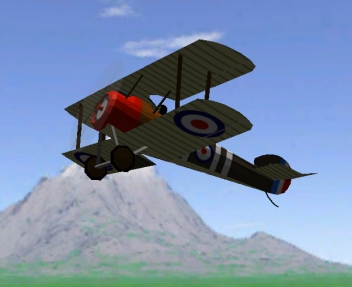
The Sopwith Camel — the British biplane that shot down more enemy aircraft than any other Allied fighter of WWI — captured as a sport-scale RC model.
About
The Sopwith Camel F.1 is the work of Herbert Smith at the Sopwith Aviation Company in Kingston-upon-Thames, England. The Camel made its first flight on December 22, 1916, and entered Royal Flying Corps service in June 1917. The type quickly demonstrated combat capabilities that no contemporary German fighter could match — total Allied air-combat victories attributed to Camels reached approximately 1,294 enemy aircraft, more than any other Allied fighter of WWI.
The Camel's combat record came at a cost. The type's defining engineering features — a rotary engine (the entire engine block rotated around a stationary crankshaft), heavily concentrated mass at the nose, and pugnacious flying characteristics — made the Camel famously difficult to fly. Right turns came easily because of the rotary's gyroscopic precession; left turns required nose-down inputs to compensate for the same effect, leading to many fatal training accidents in the type. The "Camel" nickname came from the metal hump over the breeches of the twin Vickers machine guns.
Total Camel production reached approximately 5,490 airframes between 1917 and 1918. The unmistakable Camel silhouette — rounded fuselage, distinctive gun-cowling hump, and the characteristic squared-off Sopwith biplane wing — is one of the most-modeled WWI fighter subjects in modern RC scale flying.
In the simulator
A satisfying WWI scale subject. The Camel in our sim has the demanding gyroscopic-rotary character of the real airframe — easier in right turns than left, with the kind of low-speed authority that defined WWI biplane combat. A natural sibling of the Fokker_DR1 (CV Planes Pack 3), Fokker DVII 250, and Spad S.VII (Scale Models pack) — four WWI fighter subjects across the catalog.