Eurofighter
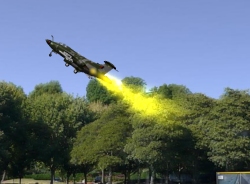
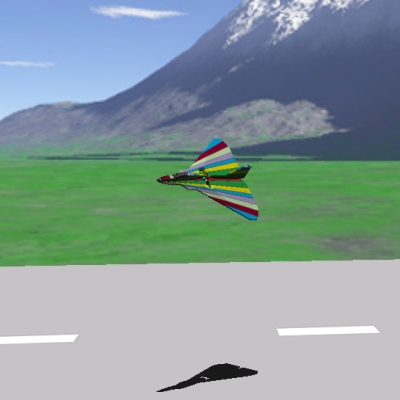
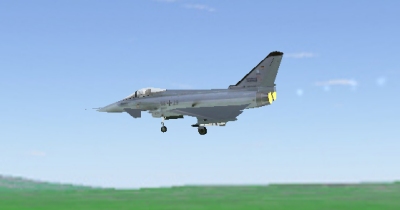
The Eurofighter Typhoon — Europe's twin-engine canard-delta multirole fighter, the joint product of British, German, Italian, and Spanish aerospace industry — captured as an RC EDF scale model.
About
The Eurofighter Typhoon is the joint product of a four-nation European aerospace consortium — BAE Systems (UK), Airbus (Germany and Spain), and Leonardo (Italy) — that grew out of the Future European Fighter Aircraft (FEFA) program of the 1980s. The Eurofighter prototype made its first flight on March 27, 1994, with British Aerospace test pilot Peter Weger at the controls. The type entered service with the Royal Air Force, Luftwaffe, Italian Air Force, and Spanish Air Force from 2003 onward.
The Eurofighter's design is centered on the close-coupled canard-delta configuration that gives the type its distinctive silhouette and supermaneuverable handling. Twin EJ200 turbofans, a digital fly-by-wire flight control system that allows the aerodynamically-unstable airframe to be flown by a human pilot, and modern AESA radar and sensor fusion put the Typhoon at the top of Europe's combat aircraft capability. The type has been exported to Saudi Arabia, Austria, Oman, Kuwait, and several other operators.
The unmistakable Eurofighter silhouette — close-coupled canards, swept delta wing, twin tails — is one of the most-modeled modern European fighter subjects in RC EDF scale flying.
In the simulator
A demanding modern multirole-fighter scale subject. Substantial inertia, twin-engine throttle coordination, and the kind of approach speeds suited to a fourth-generation Eurofighter.