BF-109 Messerschmitt
The Messerschmitt Bf 109 — Germany's most-produced fighter aircraft of WWII, the airframe Erich Hartmann flew to 352 aerial victories — captured as a high-quality RC scale warbird.
About
The Messerschmitt Bf 109 (also designated Me 109) is the work of Willy Messerschmitt and his team at Bayerische Flugzeugwerke (BFW). The Bf 109 V1 prototype made its first flight on May 28, 1935, with test pilot Hans-Dietrich Knoetzsch at the controls. The type entered Luftwaffe service in 1937 and went on to serve through every theater and every year of the European war that followed, with production continuing into the early postwar period in Spain (as the Hispano Aviación Buchón) and Czechoslovakia (as the Avia S-99 / S-199).
Total Bf 109 production reached approximately 33,984 airframes — making the Messerschmitt one of the most-produced fighters in history. The Bf 109 was the airframe in which Erich Hartmann scored 352 aerial victories on the Eastern Front (the highest individual fighter pilot score in history), and the type produced more aces than any other fighter of WWII. The Bf 109's enclosed cockpit, retractable landing gear, and stressed-skin all-metal construction set the design template that influenced fighter aircraft worldwide through the late 1930s.
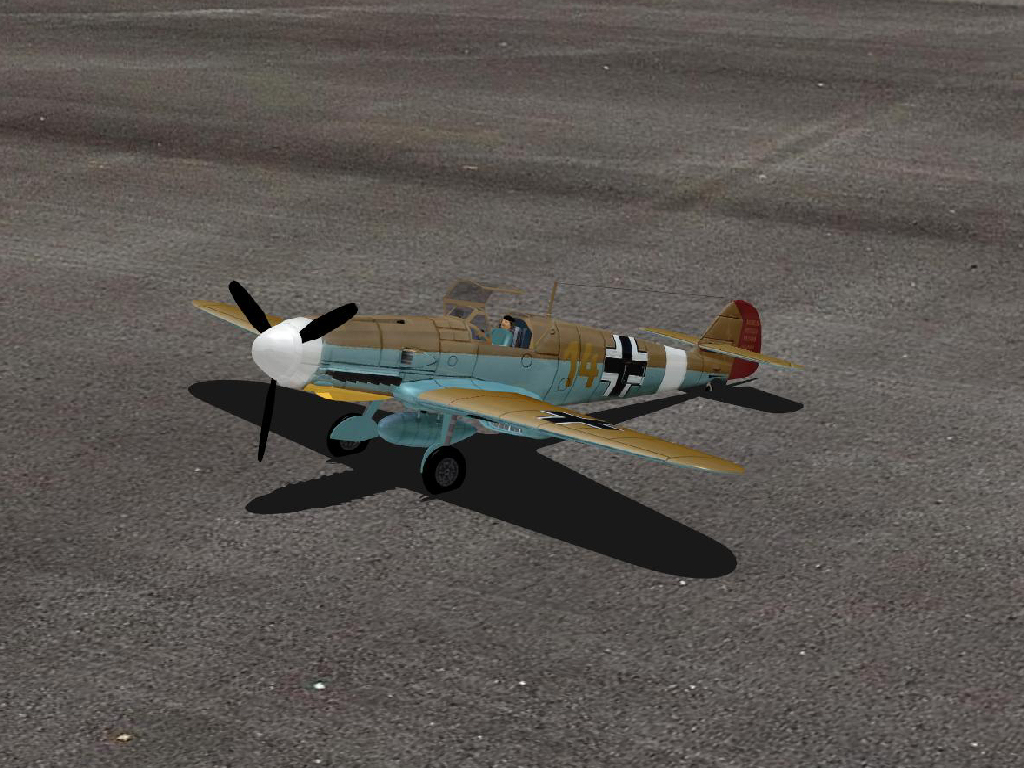
The unmistakable narrow-track landing gear (the source of many ground accidents during training), the inverted-V Daimler-Benz inline engine, and the distinctive cockpit-cowling profile of the Bf 109 appear in countless modern RC scale warbird kits.
In the simulator
A demanding warbird scale subject. The Bf 109 has the responsive handling of a real Daimler-Benz-powered fighter and the narrow-track landing gear that made the real airframe famously difficult on the ground. A natural sibling of the ME 109 (Models Pack 2) — same airframe, different scale.