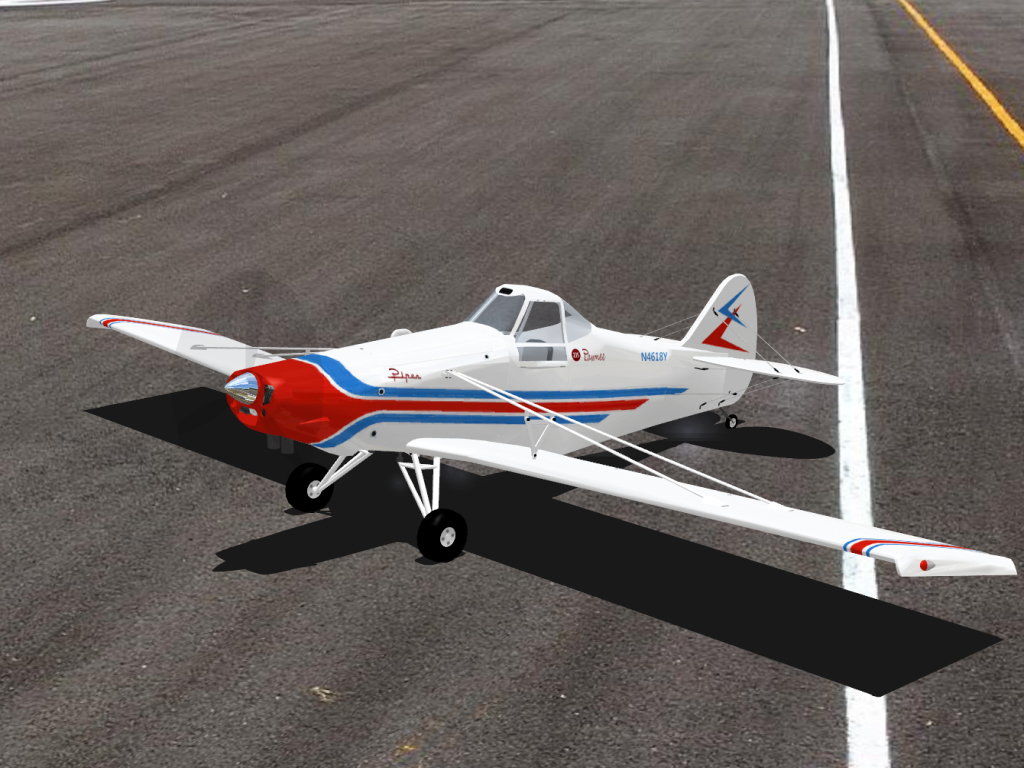
Piper Pawnee HQ
The Piper PA-25 Pawnee — the purpose-built agricultural plane that became one of the most successful crop-dusters and glider-towing aircraft of the late twentieth century — captured as a high-quality RC scale model.
About
The Piper PA-25 Pawnee was developed in the late 1950s as a replacement for the various converted-trainer crop-dusters then dominating the agricultural aviation market. Designed by Piper Aircraft as the first purpose-built agricultural airframe in the company's lineup, the Pawnee made its first flight in 1959 and entered production at Piper's Lock Haven, Pennsylvania, factory shortly after. The design was deliberately rugged — single-seat, fixed taildragger gear, large hopper amidships, big high-lift wing for low-altitude maneuvering — and the engine was the dependable Lycoming flat-six familiar from contemporary general aviation aircraft.
The Pawnee became the workhorse of American crop-dusting through the 1960s and 1970s, gradually displaced from agricultural work by purpose-built turbine aircraft like the Air Tractor in the 1980s. Surplus Pawnees found a second career in glider-towing operations, where the strong airframe, modest fuel consumption, and excellent low-speed handling made the type the dominant tug aircraft at glider clubs worldwide. Surviving Pawnees continue to fly active commercial agricultural and glider-tow operations today.
The unmistakable Pawnee silhouette — single-seat hopper-fuselage, low wing, taildragger landing gear — is one of the more distinctive agricultural-aviation subjects in modern RC scale flying. The "HQ" suffix refers to a higher-quality giant-scale RC implementation.
In the simulator
A satisfying agricultural scale subject with the slow, deliberate handling of a real working crop-duster or glider-tug. Use it for sport-scale flying with the workmanlike character of an agricultural airframe.