AileronTrainer
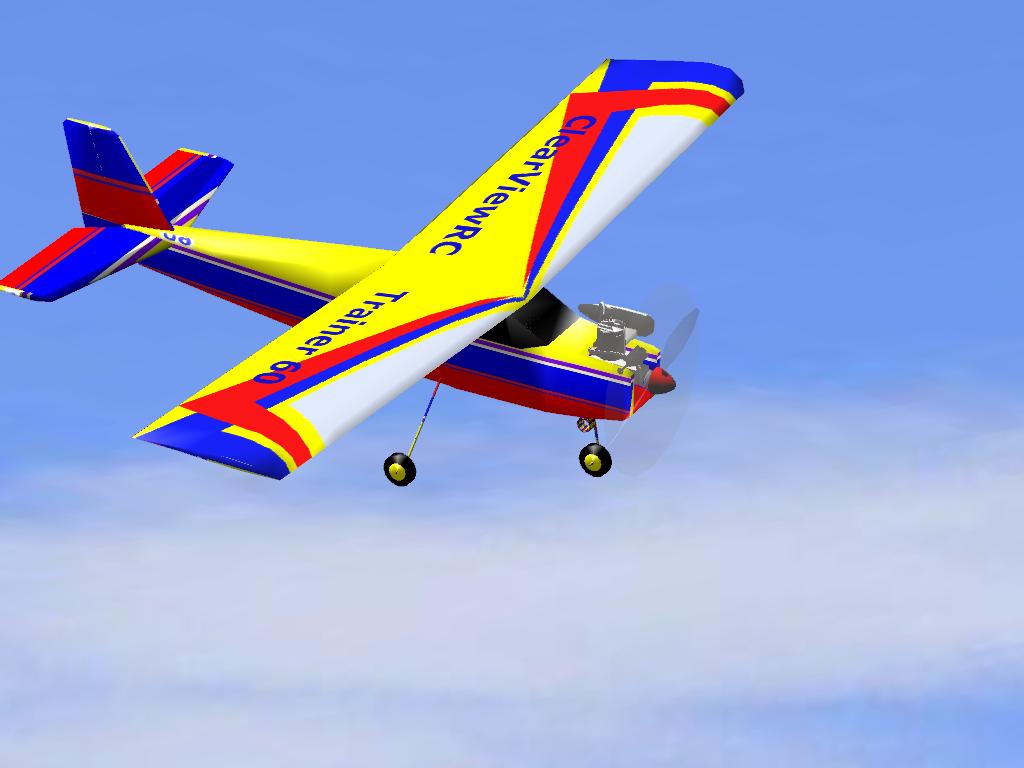
The honest, hardworking .60-class high-wing trainer — the kind of aircraft every RC pilot remembers fondly as their first.
About
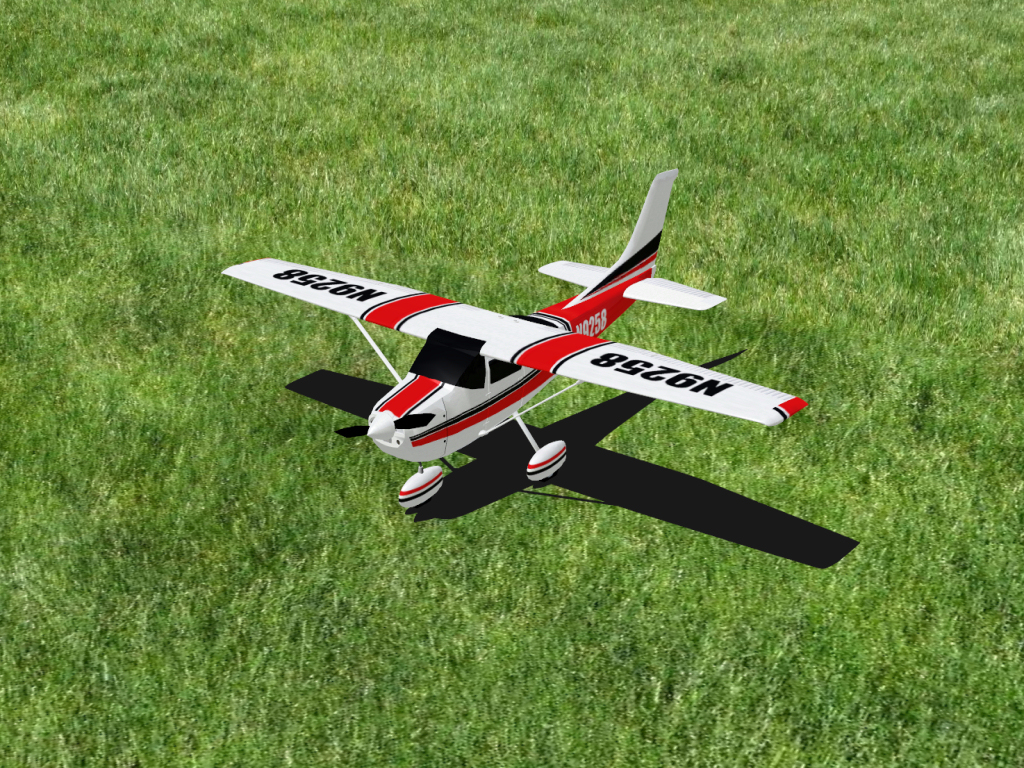
This is the kind of aircraft every flyer started with — and the kind every flying club still keeps a few of in the hangar for new students. A timeless .60-class high-wing trainer: strong enough to stand the abuse of early training, easy enough to set up that a club instructor can have a beginner in the air the same afternoon, and forgiving enough that the inevitable hard landings become teaching moments rather than rebuild projects.
The design speaks for itself. Generous dihedral and a high wing self-right when you let go of the sticks. Wide-track tricycle gear forgives a sloppy approach. The bright, high-visibility color scheme keeps orientation clear at altitude. And the .60-class powerplant — whether a classic two-stroke glow engine or its modern brushless equivalent — gives you headroom to climb out of a mistake without ever feeling overwhelming. There's a reason this layout has barely changed in forty years: it works.
Generations of pilots learned to fly behind an aircraft like this, and many keep one in the hangar long after they've graduated to aerobatic mounts and scale warbirds. There's a particular pleasure in flying an honest, simple airplane on a calm Sunday morning that no high-performance airframe can quite replace. The "60" in the name refers to the engine class — the 0.60-cubic-inch (10 cc) glow engine that defined the medium-large training category — but the airframe layout is just as happy on modern lithium-polymer batteries.
In the simulator
The default starting point for new pilots in Absolute RC. Stable, predictable, slow enough to react to, fast enough to hold altitude in wind. Use it to learn the four core skills before anything else: coordinated turns, takeoff trim, the landing pattern, and recovery from unusual attitudes. It will forgive a thousand mistakes while you build muscle memory. When this aircraft feels easy, step up to the Magister, then to the Cessna 182 or the Decathlon.