B-17-FlyingFortress
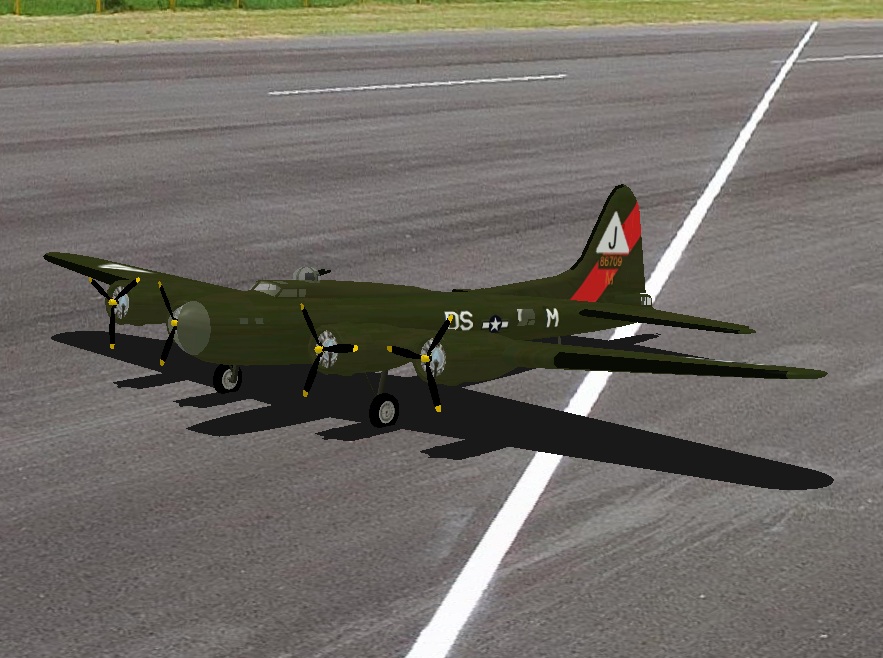
The Boeing B-17 Flying Fortress — the four-engine heavy bomber that fought the daylight bombing campaign over Germany — captured as an RC scale warbird.
About
The Boeing B-17 Flying Fortress was developed in the mid-1930s in response to a U.S. Army Air Corps requirement for a multi-engine bomber capable of defending Hawaii from naval attack. The Model 299 prototype made its first flight on July 28, 1935, and a Seattle newspaper reporter looking at the aircraft's defensive armament and overall imposing presence dubbed it the "Flying Fortress" — a nickname that stuck and was eventually trademarked by Boeing.
The B-17's defining contribution was the daylight strategic bombing campaign over Germany. Operating from bases in England as part of the U.S. 8th Air Force from 1942 onward, B-17s flew thousand-bomber raids against German industrial targets, suffering devastating losses on early unescorted missions before the arrival of long-range P-51 Mustang escort fighters changed the equation. The Fortress became famous for its ability to absorb battle damage — multiple engines knocked out, tail sections shredded, control surfaces in tatters — and still bring its crew home.
Total B-17 production reached 12,731 airframes between 1935 and 1945, built by Boeing, Douglas, and Lockheed Vega. The unmistakable B-17 silhouette — four engines on a long high wing, distinctive stepped tail group with the tall vertical fin, glazed bomb-aimer's nose — is one of the most-modeled WWII bomber subjects in modern RC scale flying, typically tackled at giant-scale by serious four-engine modelers.
In the simulator
The most ambitious multi-engine warbird in this pack. Four-engine throttle coordination, substantial inertia, and the kind of unhurried pattern flying a real B-17 pilot trained for. Use it for serious four-engine scale flying with iconic WWII visual signature.